
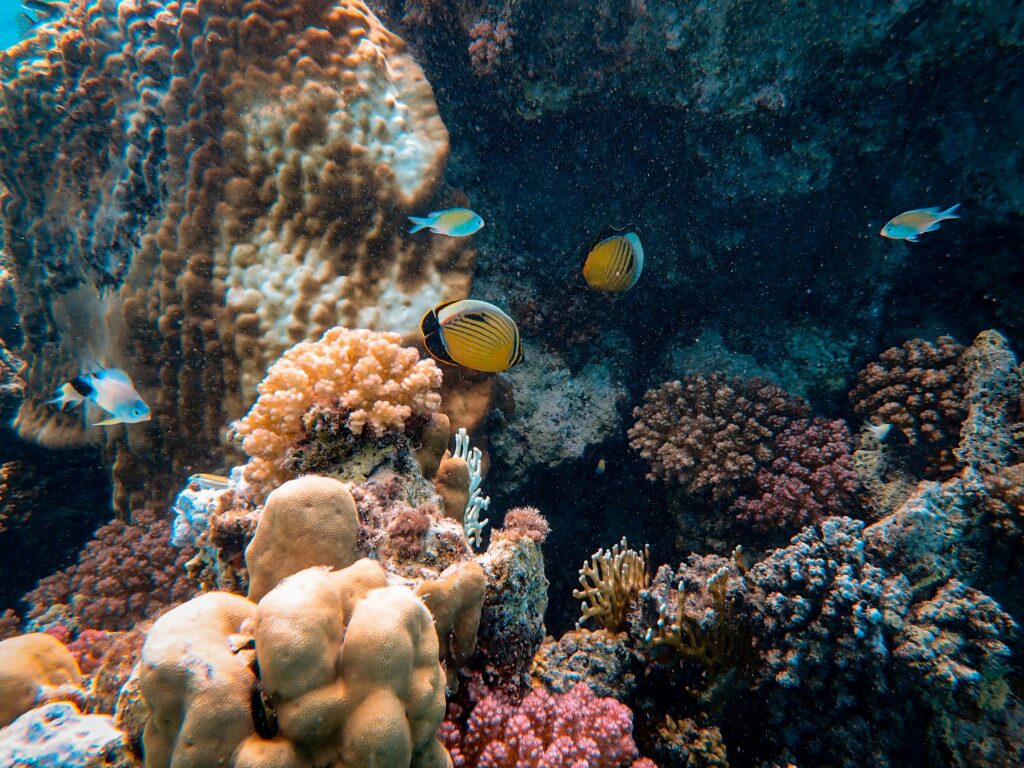
When you think of coral, you might picture something like an underwater plant swaying gently with the current. But coral isn’t a plant at all: it’s an animal! In fact, a coral “colony” is made of many tiny animals living together. Each tiny animal is called a polyp. Over time, polyps build huge underwater structures that can grow into coral reefs.
There are two big groups of corals you’ll often hear about: hard corals and soft corals.
- Hard corals (sometimes called “stony corals”) are soft-bodied polyps that build a hard skeleton made of calcium carbonate, the same mineral found in seashells. Layer by layer, these skeletons build the strong framework of a coral reef. That hard surface also gives baby corals a place to attach and grow.
- Soft corals bend and sway with the water and can look like plants or trees. They don’t build the rocky reef framework the same way. Many have flexible support inside their bodies and tiny hard bits in their tissue that help protect them.
Coral reefs are like underwater cities. Fish weave through the branches, and many sea animals use them as homes, hiding places, and nurseries for their young. Even though reefs cover less than 1% of the ocean floor, they support about a quarter of ocean species. That makes coral reefs one of the most important ecosystems on Earth.
Corals have an amazing partnership with tiny algae (plant-like microbes) called zooxanthellae. These algae live inside the coral’s tissue. Using sunlight, they make food through photosynthesis, and they share much of that energy with the coral. In return, the coral gives the algae a safe place to live. This teamwork helps reefs grow and is a big reason corals can be so colorful.
But coral reefs are fragile. Warmer oceans, pollution, and overfishing can harm them. When corals get stressed, especially by heat, they may push out their algae. Without the algae, the coral turns pale or white. This is called coral bleaching. Bleached corals aren’t always dead, but they are weakened. If the algae don’t return and the stress lasts too long, the coral can die.
The good news is people are working to help reefs recover. Scientists and conservation teams protect reef areas, reduce pollution, and even grow young corals in nurseries to plant back onto damaged reefs. And everyday choices matter too, like using less plastic and choosing seafood that’s caught in ways that protect ocean life.
So next time you see a bright coral reef, remember: you’re looking at millions of tiny animals working together—building homes, supporting sea life, and helping shape one of Earth’s most important habitats. Coral may look like stone, but it’s very much alive.