
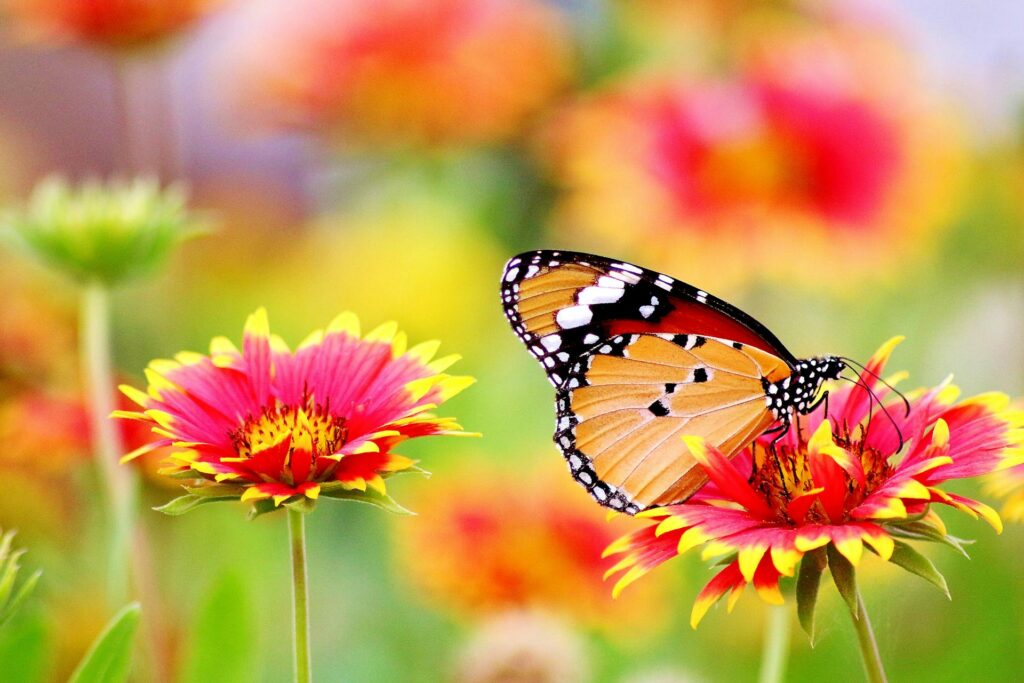
If you’ve ever watched a bee or a butterfly bounce from flower to flower like they are on a tiny mission, you’ve seen pollination in action. Pollinators aren’t just “visiting” flowers: they’re helping plants reproduce, which can lead to seeds, fruits, and new plants.
In this activity, you’ll run a simple backyard (or balcony!) experiment to explore a real question scientists’ study: Do pollinators prefer some “nectar” recipes over others?
You’ll make a few safe sugar-water mixtures, set up a fair test, and record what you observe: just like a field researcher!
What you’re testing:
Pollinators use nectar as a fuel source. Nectar naturally varies between plants and species, and it contains different sugar concentrations. In this experiment, you’ll compare three sugar-water “nectars” and observe which gets the most visits.
This won’t perfectly copy real flower nectar (flowers have scent, color, shape, and other chemicals), but it’s a great way to practice scientific thinking and notice patterns in nature.
You’ll need:
- 3 small bottle caps, jar lids, or tiny cups
- Water
- Sugar
- Measuring spoon
- Paper + marker (to label cups)
- Timer (phone is fine)
- Notebook for data
Best location: near flowering plants, but placed where you can observe from a comfortable distance.
Make your nectar samples (3 concentrations)
You’ll create three different mixtures:
- Cup A: 5% sugar
Mix 1 teaspoon sugar + 19 teaspoons water - Cup B: 15% sugar
Mix 3 teaspoons sugar + 17 teaspoons water - Cup C: 25% sugar
Mix 5 teaspoons sugar + 15 teaspoons water
Stir until dissolved. Label them clearly: A, B, C. To make results meaningful, try to keep everything except sugar concentration the same.
Set the cups with the different nectar samples near plants or flowers. Sit quietly somewhere nearby (preferably out of view), and use the notebook to record each pollinator visit. Bonus points for identifying which pollinator it was!
At the end of the experiment, check your notes to see which of the three nectar samples was the most popular! If you included insect information as well, you can analyze patterns and draw conclusions. If you want to make this experiment even more scientific, start with a hypothesis or a guess (e.g. “Pollinators will prefer the middle concentration” or “different insects will prefer different cups”), and then see if the data collected supports your theory.
Have fun getting to know your wildlife neighbors!