
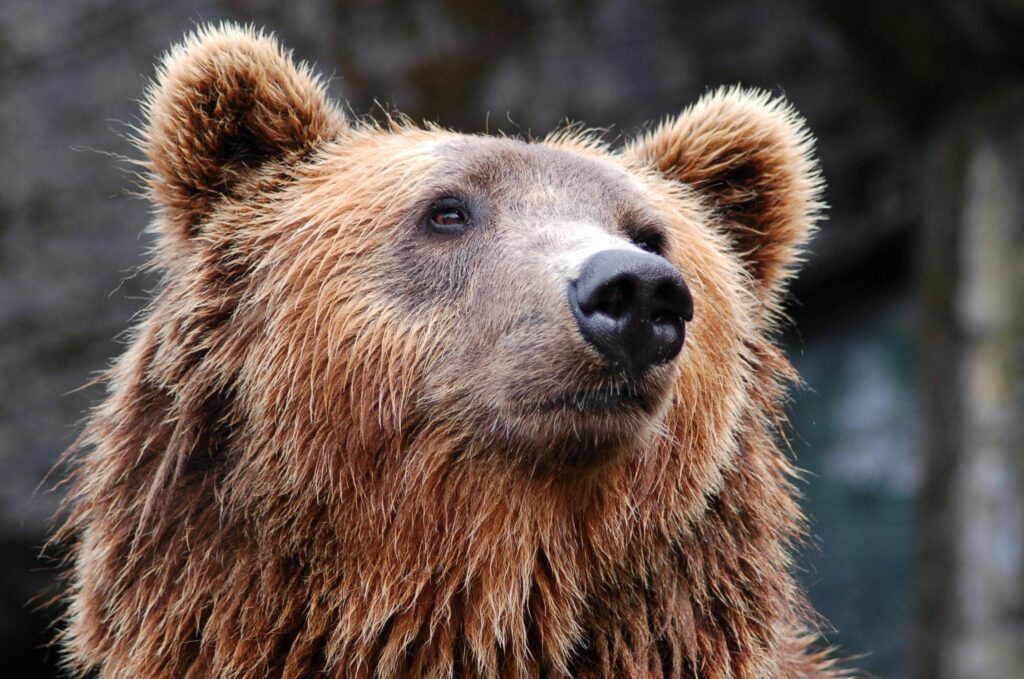
Imagine you’re out on a hike and spot a bear far away in the trees. Wow! But wait… is it a black bear or a brown bear? It might sound easy to tell, but it’s actually a little tricky.
That’s because black bears are not always black. Some can be brown, cinnamon-colored, or even blond! And brown bears can sometimes look very dark too. So if color does not always help, what should you look for?
One big clue is the bear’s body shape. Brown bears have a large hump on their shoulders. This extra muscle helps them dig for food like roots and small animals. Black bears do not have that hump. Their backs usually look smoother, and they are often higher near the rear.
You can also look at the bear’s face and ears. Black bears usually have a straighter face profile and taller, pointier ears. Brown bears often have a face that dips in a little, almost like a gentle curve, and their ears are shorter and rounder.
A bear’s claws tell a story too. Brown bears have long claws that are great for digging. Black bears have shorter, curved claws that help them climb trees. Black bears are usually better climbers, although both kinds of bears can climb.
Even their tracks can give you clues. Brown bear tracks often show longer claw marks, while black bear tracks may show shorter ones. But tracks can be hard to read, so scientists use more than one clue when identifying a bear.
Both black bears and brown bears are important to nature. They help spread seeds, turn over soil while searching for food, and help keep ecosystems healthy. Even though bears are powerful animals, they usually try to avoid people.
That’s why it is so important to admire bears from a safe distance and never get too close. The more we learn about wild animals, the more we can understand and protect them.
So next time you see a bear in a book, on a sign, or maybe even far away on a trail, try your best bear detective skills. Look at the shoulders, the face, the ears, and the claws. You might be able to solve the mystery: black bear or brown bear?