
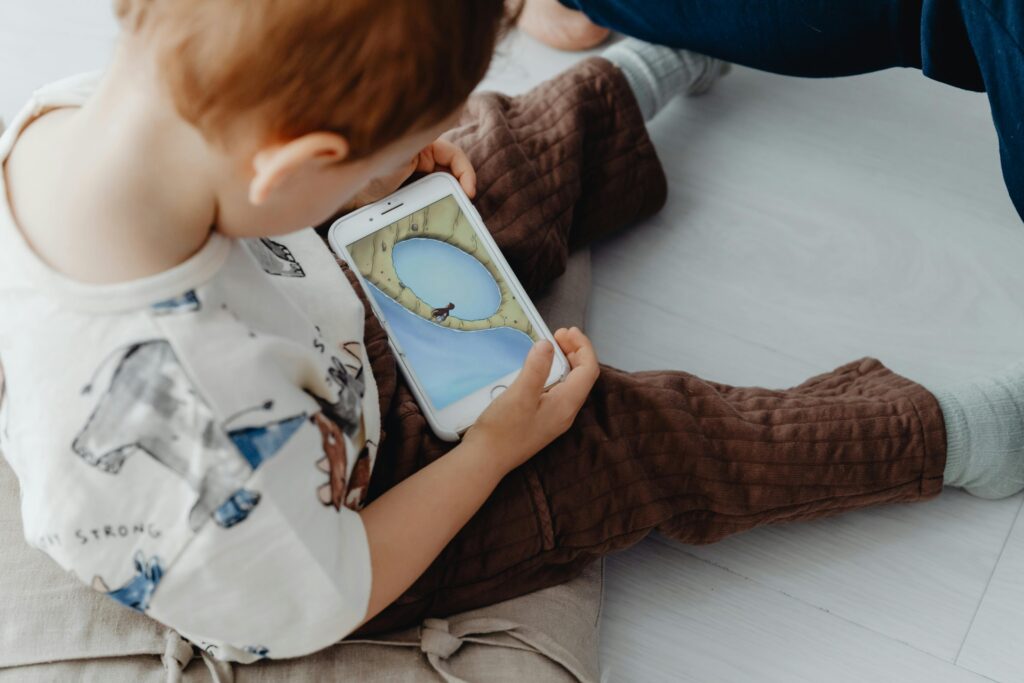
Screens are one of the biggest stress points for parents of toddlers because they’re everywhere: phones, tablets, TVs, laptops—and even the “background” screen that’s just on in the room. And in real life, screen time isn’t always a philosophical debate. Sometimes it’s the difference between finishing dinner and a full meltdown in a restaurant.
So what do experts actually say?
The most helpful, research-backed guidance starts with one reassuring idea: not all screen time is the same. It’s less about a single magic number and more about a few practical questions: How much? What kind? Is an adult involved? And what is screen time replacing: sleep, play, movement, or conversation? When you look at screen time through that lens, it becomes much easier to make choices that fit your family (without aiming for perfection).
One well-established point in child development is that toddlers learn best through interaction. They build language when someone responds to their babbles and questions. They develop emotional regulation when a grown-up helps them settle after big feelings. They strengthen problem-solving through play. That’s why, instead of focusing only on how long your child is on a screen, it helps to focus on how screens are being used.
For example, high-quality, age-appropriate content watched with an adult is very different from fast-paced, autoplaying content watched alone. When you sit with your toddler and comment on what you’re seeing (“That dog is running fast!” “Oh look, she found the red ball!”), you bring back some of the back-and-forth that toddlers need most. Even a few small moments of shared attention can make screen time more development-friendly.
At the same time, most experts do recommend keeping screen use relatively limited in the toddler years. Some guidance suggests avoiding screen media altogether for children 18 months and under (except for video chat), and for older toddlers, keeping screen time to about an hour a day. The main concern isn’t that screens are “bad”, it’s that they can quietly replace key building blocks of toddler development: human interaction, unstructured play, physical movement, and sometimes even sleep.
What if screens are already part of your toddler’s life?
That’s most families—and you’re not behind. The realistic goal isn’t perfection. It’s a few consistent habits that make screens easier to manage:
- Keep screens out of bedtime routines when possible;
- Avoid using screens as the main tool for calming every upset;
- Turn off background TV when nobody is really watching;
- Choose slower, age-appropriate content;
- Watch with your toddler when you can, and talk about what you’re seeing;
- Create screen-free spaces that protect the anchors of toddler life: meals, playtime, and sleep.
And here’s the part parents often need to hear most: this doesn’t have to be all-or-nothing. Science-backed screen guidance is really guidance about development: toddlers need interaction more than entertainment, relationships more than devices, and routines more than unlimited access. When screens are limited, intentional, high-quality, and often shared, they’re much less likely to crowd out the experiences that matter most.
You’re not failing if your toddler watches a show so you can get through a hard moment—you’re parenting. Small, steady choices add up, and you can adjust the balance anytime!